Open Letter To: US Supreme Court Justices, Clarence Thomas and Ketanji Brown Jackson
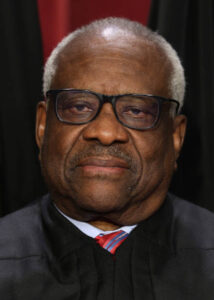
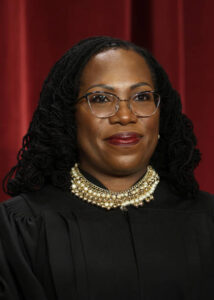
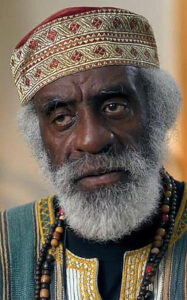
Greetings, Honorable Justices Clarence Thomas and Ketanji Brown Jackson,
Shalom.
My name is Ted Hayes. I write to you with humility, urgency, and deep respect for the gravity of your office.
As of March 9, 2026, I am seventy-five years old—a surviving participant in the late-1960s Civil Rights Movement, born in Aberdeen, Maryland in 1951, and the eldest son of a United States Army combat veteran of the 92nd Infantry Division (“Buffalo Soldiers”), wounded and decorated in both World War II and the Korean Conflict.
For more than forty years, I have resided in Los Angeles, where I have devoted my life to addressing homelessness and its underlying structural causes—work that has brought me into direct contact with the consequences of unresolved constitutional failures.
I write as a descendant of America’s chattel slaves, even as the two of you are as well—that is, we are of those for whom the Civil War was fought, emancipation was declared, and federal citizenship was established by the Civil Rights Act of 1866 (The Act), later codified by the Fourteenth Amendment.
Today, descendants of those federalized citizens constitute approximately 11–13% of the national population, yet represent over 60% of the unhoused nationwide. In Los Angeles County—now the epicenter of homelessness—we are under 10% of the general population, yet we exceed 40% of the homeless. On Skid Row, over 90% of the unhoused are male federal citizens.
These outcomes are not accidental.
They reflect generations of incomplete enforcement of the very federal protections designed to secure our “actual freedom,” equal protection, and civic standing “as is enjoyed by white citizens,” as articulated in Section 1 of the 1866 Act.
From the era of President Lincoln forward, descendants of chattel slavery have relied—necessarily—upon federal authority to remedy state, county, and municipal failures to uphold equal justice. This reliance is not philosophical; it is constitutional and historical.
It is in this context that I respectfully raise concern over the modern expansion of Fourteenth Amendment “birthright citizenship” claims beyond the Amendment’s original subject beneficiaries.
The unresolved conflation of federal citizenship—created to secure freedom for a formerly enslaved people—with contemporary immigration claims now threatens to dilute both political representation and constitutional clarity.
I do not write to advocate hostility toward immigrants, nor to trespass upon policy domains beyond the Court’s role.
Rather, I appeal to the Court’s responsibility to interpret the Constitution faithfully, historically, and with moral seriousness—particularly where the consequences fall most heavily upon those the Amendment was written to protect.
The pending national controversy surrounding the Fourteenth Amendment does not merely concern immigration policy; it concerns constitutional identity, standing, and the durability of a republican form of government under Article IV, Section 4.
As members of the Supreme Court—and as Americans whose lives and histories intersect uniquely with this Amendment—you possess both the authority and the lived standing to ensure that its original purpose is neither erased nor inverted.
History remembers moments when silence proved costly.
The Civil Rights Act of 1866, authored and defended by Congressman John A. Bingham, explicitly reserved final appellate authority to this Court on questions arising under that Act. (Section 10, The Act)
The record—including President Andrew Johnson’s veto—makes clear that the Act’s subject beneficiaries were the formerly enslaved and their descendants.
I respectfully ask that you consider whether the Court’s forthcoming decisions will preserve or dilute that foundational intent.
I do not presume to instruct the Court. I appeal to its conscience.
Should you deem it appropriate, I humbly seek an opportunity—through proper channels—to be heard further on this matter before decisions of irreversible consequence are rendered.
Thank you for your service, your deliberation, and your attention.
With respect and hope,
Ted Hayes
Los Angeles, California
Agape-Shalom