“APRIL FOOLS”: WHILE WE WERE DISTRACTED, WAS OUR BIRTHRIGHT GIVEN AWAY?
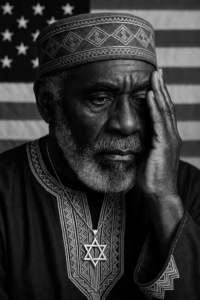
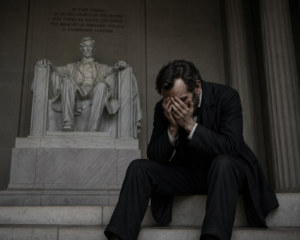

Greetings and Shalom to my fellow American Africans—the descendants of America’s chattel slaves and the federal citizens created by the Civil Rights Act of 1866.
Something historically important has happened, and almost none of us know it, as was intended.
On June 30, 2026, the United States Supreme Court issued its decision in Trump v. Barbara, No. 25-365. The case concerned President Donald J. Trump’s Executive Order 14160, “Protecting the Meaning and Value of American Citizenship.”
But beneath the immigration arguments was a much older and deeper question:
Who were the original people protected by America’s constitutional guarantee of birthright citizenship?
I contend that the answer begins with us—the descendants of the people whom America enslaved as chattel and then legally transformed from slaves to Freedmen to United States citizens.
Yet our history, identity, and continuing federal interests were barely heard.
The people discussed—but never consulted
The lawyers argued over the meaning of the Fourteenth Amendment. Government officials, the ACLU, the NAACP, and other powerful organizations debated whether children born in the United States to parents unlawfully present here receive constitutional birthright citizenship.
But who sounded the alarm for the descendants of America’s chattel slaves—the original Subject Beneficiaries of Reconstruction citizenship?
Where were the Congressional Black Caucus, the traditional civil-rights organizations, churches, scholars, media commentators, and national leaders?
Approximately 35 million chattel-descended Americans were never meaningfully told that citizenship language born from our ancestors’ condition was being interpreted and distributed in a dispute centered upon entirely different people.
They discussed our constitutional inheritance without us.
“Well, it technically happened”
Let me be clear: we remain American citizens on paper. We can vote, work, own property, conduct business and travel.
My warning concerns something deeper: the gradual destruction of our distinct federal standing and the practical value of the citizenship secured through Emancipation and Reconstruction.
If the constitutional provisions created to complete our transition from slavery to equal citizenship can be separated from their original history and beneficiaries, then we may retain the word “citizen” while steadily losing its practical power.
That is why I say, provocatively but seriously:
Technically, America has begun pushing us backward—from federally protected citizens toward the condition of Freedmen whose promised citizenship remains unfinished.
Not through chains. Not through an official declaration. But through neglect, reinterpretation, displacement, and silence.
Citizenship must mean more than paper
Dr. Martin Luther King Jr. warned that America would experience a “rude awakening” if the Negro did not receive full citizenship rights.
The Civil Rights Act of 1866 promised us the same practical rights “as is enjoyed by white citizens.” Yet generations later, equal protection remains incomplete.
We continue to face homelessness, poor education, inadequate healthcare, violence, incarceration, economic exclusion and political neglect. We struggle to obtain fair treatment from city councils, county governments, state legislatures, law-enforcement agencies and even charitable institutions.
A citizenship that exists only on paper—but cannot secure equal protection in daily life—is unfinished citizenship.
Like a boa constrictor tightening slowly around its prey, the danger may not be obvious at first. But over time, political, economic, and numerical displacement can squeeze an already vulnerable people into social and electoral inconsequence.
If our political voice becomes inconsequential, what becomes of the Fifteenth Amendment—the constitutional protection written specifically because our ancestors had only recently emerged from slavery?
Our citizenship has a history
Our freedom and citizenship did not suddenly fall from the sky. They arose through blood, sacrifice and a connected body of federal action:
- The First and Second Confiscation Acts of 1861 and 1862;
- The Emancipation Proclamation of January 1, 1863;
- The Thirteenth Amendment;
- The Civil Rights Act of 1866;
- The Fourteenth Amendment;
- The Fifteenth Amendment;
- The Reconstruction Enforcement Acts; and
- The Civil Rights Act of 1875.
These measures formed America’s answer to chattel slavery. They were intended to transform an enslaved people and their posterity into protected, participating citizens of the United States.
Our Union soldiers did not fight and die merely to remove physical chains. They fought to preserve the Union and open the way toward actual freedom and citizenship.
That work remains unfinished.
President Trump identified the controversy—but omitted us
President Trump deserves credit for raising the question of whether the Fourteenth Amendment has been stretched beyond its intended meaning.
But his legal strategy was incomplete because it did not place the chattel-slave descendants—the living historical reason for Reconstruction citizenship—at the center of the case.
The Department of Justice argued against so-called “anchor-baby” citizenship. The opposing organizations argued for it. Both sides used constitutional language rooted in our ancestors’ emancipation.
We—the people with the deepest historical interest—were largely absent.
Even the Supreme Court’s oral argument occurred on April 1, 2026: April Fools’ Day.
The painful question practically asks itself:
Who were the fools—the people arguing over our constitutional inheritance, or the millions of us who were never told that the argument was happening?
Read the evidence for yourself
Some will strongly disagree with my conclusions. That is expected.
I am not asking anyone to accept these claims merely because I make them. I am asking my fellow chattel-descended Americans to awaken, investigate and judge the evidence for themselves.
Read my amicus curiae brief submitted in connection with Trump v. Barbara. Read The Primary Subject Beneficiary Doctrine: The Smoking Evidence. Study the Civil Rights Act of 1866, the Reconstruction Amendments, and the laws enacted to enforce them.
Then ask:
Were the citizenship guarantees born from our ancestors’ enslavement interpreted, repurposed, and effectively given away while their descendants were distracted and silent?
We must learn who we are constitutionally before our historic identity becomes politically meaningless.
This is not merely an immigration dispute.
This concerns our ancestors, our children, our citizenship, and our survival as a distinct American people.
There is much more to discuss.
But first, we must awaken.
Read The Primary Subject Beneficiary Doctrine
https://tedhayes.us/primdoct-sgun/
See the General Directory of U.S. Remedial Federalized Citizens
https://tedhayes.us/gen-dire/