Gouverneur Morri
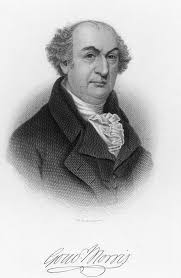
Gouverneur Morris (1752–1816) was an American Founding Father, statesman, and diplomat. A delegate to the Constitutional Convention of 1787, he played a central role in shaping the U.S. Constitution and is widely recognized as its “Penman.” His eloquent phrasing of the Preamble—beginning “We the People”—endures as one of the most iconic statements of American nationhood.
Key facts
-
Born: January 31, 1752, Morrisania (now Bronx, New York City)
-
Died: November 6, 1816, Morrisania, New York
-
Education: King’s College (now Columbia University), B.A. 1768, M.A. 1771
-
Political affiliation: Federalist
-
Major roles: Delegate to Continental Congress; U.S. Senator; Minister to France
Early life and education
Born into a wealthy New York family of French Huguenot descent, Morris was educated by private tutors and entered King’s College at age twelve, graduating at sixteen. His half-brother Lewis Morris signed the Declaration of Independence. Trained in law, Gouverneur quickly became active in New York’s revolutionary politics, helping draft the state constitution of 1777.
Architect of the Constitution
At the 1787 Philadelphia Convention, Morris emerged as one of its most outspoken and articulate members, delivering more speeches than any other delegate. As a member of the Committee of Style, he authored the Constitution’s final text and gave the document its clear structure and nationalist tone. His authorship of the Preamble symbolized his belief in a unified American people rather than a mere confederation of states.
Diplomatic and political career
Appointed by President George Washington as U.S. minister to France (1792–1794), Morris witnessed the French Revolution firsthand, recording its events in a vivid diary. Returning home, he served as a Federalist senator from New York (1800–1803) and later chaired the Erie Canal Commission, helping lay groundwork for New York’s future economic prominence.
Legacy
Morris was a fierce advocate for strong federal government and an early critic of slavery, calling it a “nefarious institution.” His influence extended beyond politics to urban planning—he helped design Manhattan’s grid system—and to finance, proposing America’s decimal coinage. Though less celebrated than contemporaries like Hamilton or Madison, his pen and intellect profoundly shaped the nation’s founding framework.