Why Ted Hayes Is Now Relevant

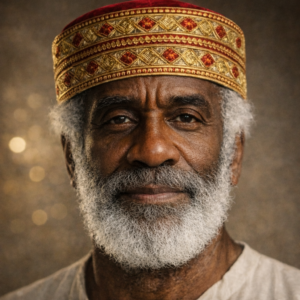
1st. Ted Hayes, summer 1985 (33 yrs mature) – 2nd. Winter -Feb. 206 (75 yrs mature)
Elevator Tease (Executive Attention Version)
Ted Hayes is not asking corporate America for money — he’s offering insight.
After more than four decades on the front lines of America’s homelessness epicenter — including eight years voluntarily living among the unhoused on Los Angeles Skid Row — Hayes brings rare, field-tested intelligence on a crisis now impacting corporate stability, workforce health, urban operations, ESG accountability, and public perception.
His approach, “In Your Interest,” reflects a new era: collaboration over confrontation, solutions over symbolism — positioning corporations not as targets, but as partners in one of the defining social challenges of our time.
Executive Bio Pitch
Ted Hayes — Strategic Advisor on Homelessness, Civic Stability & Corporate Social Foresight
An “In Your Interest” Perspective for Corporate Leadership
Ted Hayes is widely recognized as one of the longest-serving, foremost grassroots advocates working directly within America’s homelessness crisis — particularly in Los Angeles, often called the nation’s homelessness capital.
For more than 40 years, Hayes has operated not from theory alone but from lived proximity to the issue, including eight voluntary years residing among unhoused and homeless individuals on Skid Row sidewalks to better understand the human, structural, economic, and psychological drivers of chronic homelessness.
This immersive experience, combined with decades of civic engagement, has produced what many observers consider a uniquely practical perspective: one that bridges street-level reality, public policy, faith-based moral insight, community organizing, and potential private-sector partnerships.
Importantly for today’s corporate environment, Hayes represents a generational shift away from adversarial activism associated with past eras of public shaming or “corporate shakedown” approaches. His current framework — often described as “In Your Interest” — emphasizes mutual benefit:
-
Stable communities support stable markets.
-
Addressing homelessness reduces operational risk for businesses.
-
Constructive engagement enhances corporate reputation and ESG credibility.
-
Solutions rooted in dignity reduce long-term public expenditure burdens that eventually affect corporate taxation, workforce productivity, and consumer confidence.
Hayes’ work has included pioneering community models such as Justiceville and Dome Village, as well as broader strategic proposals, such as the EXODUS II initiative — a documented, long-range approach to addressing homelessness through dignity-centered, opportunity-based civic frameworks rather than perpetual emergency response systems.
He also brings particular insight into the disproportionate impact of homelessness on Black Americans and other marginalized populations, shaped by historical, socio-economic, and structural inequities. His decades navigating these realities position him to speak candidly yet constructively about issues many corporations seek to understand but often struggle to approach authentically.
As of February 17, Hayes has emphasized a renewed phase of engagement —
One focused on partnership, innovation, and hopeful forward vision rather than critique alone.
This evolution reflects both personal experience and a broader societal recognition that solving complex urban challenges requires cross-sector collaboration.
For corporate leaders, Hayes is best understood not as an activist seeking concessions, but as a strategic resource:
-
A field-tested observer of social trends affecting urban business environments
-
A bridge between corporate leadership and marginalized communities
-
A contributor to forward-thinking ESG, workforce stability, and civic reputation strategies
-
A voice advocating dignity, resilience, and pragmatic long-term solutions
In an era where homelessness increasingly intersects with corporate risk management, urban planning, public relations, employee well-being, and national economic stability, Hayes’ perspective arrives at a particularly relevant moment.
His message is straightforward:
This is not about charity.
It’s about shared interest, shared stability, and shared future.