Government Chartered Volunteered Township Option (short)
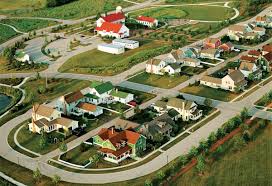
Phase IV Justiceville Vision: Off the Streets Onto Federal Lands
A Condensed Narrative Statement
The Justiceville Phase IV vision proposes a voluntary pathway to address chronic homelessness through government-chartered townships located on suitable federal or underutilized land. The goal is not simply housing, but the restoration of dignity, productivity, community stability, and responsible citizenship — what might be called a modern American “promised land” grounded in opportunity rather than dependency.
This proposal begins with a firm constitutional warning. These townships must never become instruments of coercion, forced relocation, or social containment. Any attempt to compel homeless persons or marginalized populations into such communities would violate both constitutional principles and moral conscience. History demonstrates that even educated societies can drift toward exclusion and abuse when fear, insecurity, and concentrated authority go unchecked. Justiceville activism stands firmly against any such possibility.
The township concept is therefore rooted in voluntarism, freedom of movement, and civic dignity. Its purpose is opportunity — not containment.
At its core, the township model emphasizes self-governance. These communities would operate under locally developed charters, with elected leadership, civic services, and democratic accountability. Government mission offices at the federal, state, and regional levels would maintain a limited presence, primarily for oversight, constitutional protection, and conflict mediation, rather than for direct control. Excessive intervention would signal governance failure and risk undermining the very freedoms the model seeks to preserve.
Self-rule, however, carries responsibility. History repeatedly shows that those who escape oppressive systems can unintentionally reproduce them if vigilance, maturity, and ethical leadership are lacking. The township framework, therefore, emphasizes civic responsibility, humility in leadership, and the ongoing discipline required to maintain just communities.
Importantly, these communities are not envisioned solely for people transitioning out of homelessness. A stable township would include a mixed population: formerly homeless individuals, working families, professionals seeking less-stressful living environments, seniors, veterans, and individuals rebuilding their lives. This diversity reduces stigma and fosters mutual support.
The vision also recognizes the need for transitional adjustment. Individuals leaving homelessness or institutional systems often require time to rebuild routines, skills, and confidence. This “wilderness” phase is understood as preparation for sustainable participation in community life rather than a period of dependency.
Decentralization is a central principle. Overcrowded urban centers face rising housing costs, strained infrastructure, and social fragmentation. Planned communities on underutilized lands — including former federal properties with existing infrastructure — offer an opportunity to relieve urban pressure while creating productive new civic spaces.
These townships would incorporate integrated economic ecosystems: employment opportunities across industries, education systems, healthcare services, transportation networks, retail infrastructure, and cultural amenities. The aim is full community life rather than isolated housing projects.
Quality of life is central. Residents would pursue gainful employment, healthcare access, insurance protections, and stable housing within a framework that encourages responsibility, productivity, and community cohesion.
Ultimately, the Justiceville township vision reflects a broader New Frontier perspective — the understanding that societies periodically need new spaces, renewed imagination, and generational responsibility to address emerging challenges. Just as past frontiers reshaped American development, new civic models may be required to address modern social realities.
This proposal is not presented as a single solution to homelessness, but as one constructive option among many. It seeks to combine compassion with realism, freedom with responsibility, and innovation with constitutional safeguards.
The aspiration remains simple yet profound: to create environments where individuals — regardless of past hardship — can rediscover stability, dignity, productivity, and hope.